1967 New Zealand 2c Error Coin — NZ / Bahamas "Mule" — About Uncirculated (aUNC)
1967 New Zealand 2c Error Coin — NZ / Bahamas "Mule" — About Uncirculated (aUNC)
Couldn't load pickup availability

Single About Uncirculated (aUNC) key error coin struck by the Royal Mint, London. Housed in a brand-new, archival-grade Mylar flip for ultimate long-term protection.
- 1967 New Zealand 2c Error Coin famous for the New Zealand / Bahamas "Mule" die pairing.
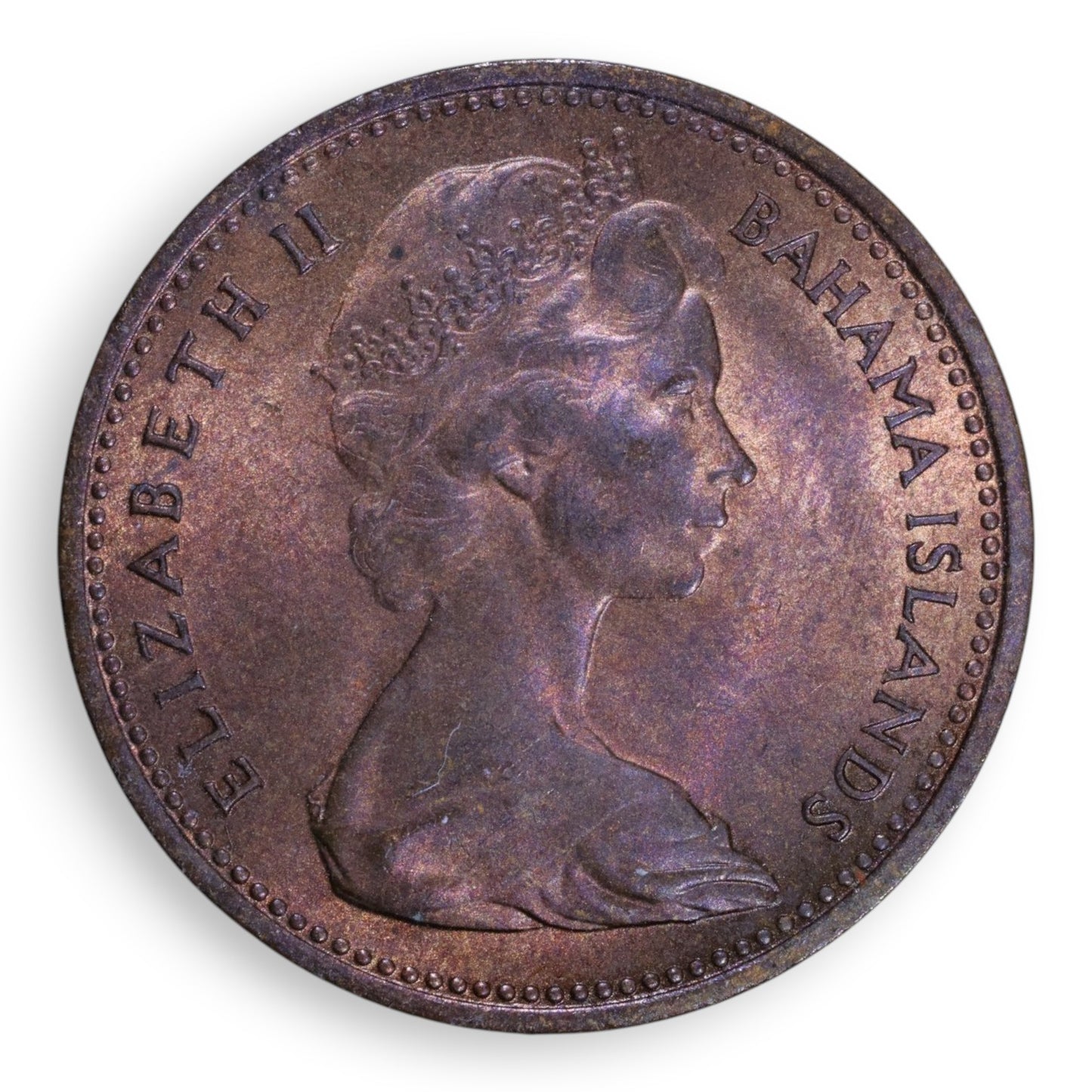
- Historic Minting Mishap: Struck using a New Zealand 2c reverse die paired with a Bahamas 5c obverse die at the Royal Mint in London during the rollout of decimal currency.
- Condition Standard: Graded About Uncirculated (aUNC), preserving original, uncleaned metal structure, micro-flowlines, crisp Kowhai leaf veining, and tiara pearl definition.
- Toning & Surface Assessment: Displays vibrant violet, blue, and rose wood-grain toning with localised oxidation layers creating muted fields across both obverse and reverse.
- Catalogue Reference: Numista N# 35693.
- Mintage & Survival: While up to 100,000 mules were struck, approximately 60,000 were intercepted and destroyed after a manual mint inspection, leaving only a fraction in collector hands.
- Technical Specs: Bronze (97% Copper, 2.5% Zinc, 0.5% Tin), 4.15g weight, 21.08mm diameter, plain edge.
Please Note:
- Package Contents: This listing is for the single featured error coin.
- Condition & Lustre Reality: Completely original and uncleaned. Features areas of muted cartwheel lustre due to spotty environmental oxidation across both sides, along with minor natural verdigris spots as imaged.
- Image Note: Images reflect the exact coin available for purchase.
About this Coin
The 1967 New Zealand / Bahamas 2c Mule is Australia and New Zealand's most famous modern decimal error coin. Produced at the Royal Mint in London during the transition to decimal currency, a die mixer paired a New Zealand 2c Kowhai reverse with a Bahamas 5c obverse.
This specimen presents in uncleaned About Uncirculated condition with completely original flowlines. While localated environmental oxidation creates muted fields on both obverse and reverse, its striking iridescent cabinet patina and sharp detail make this a fascinating, genuine addition for decimal error specialists.